
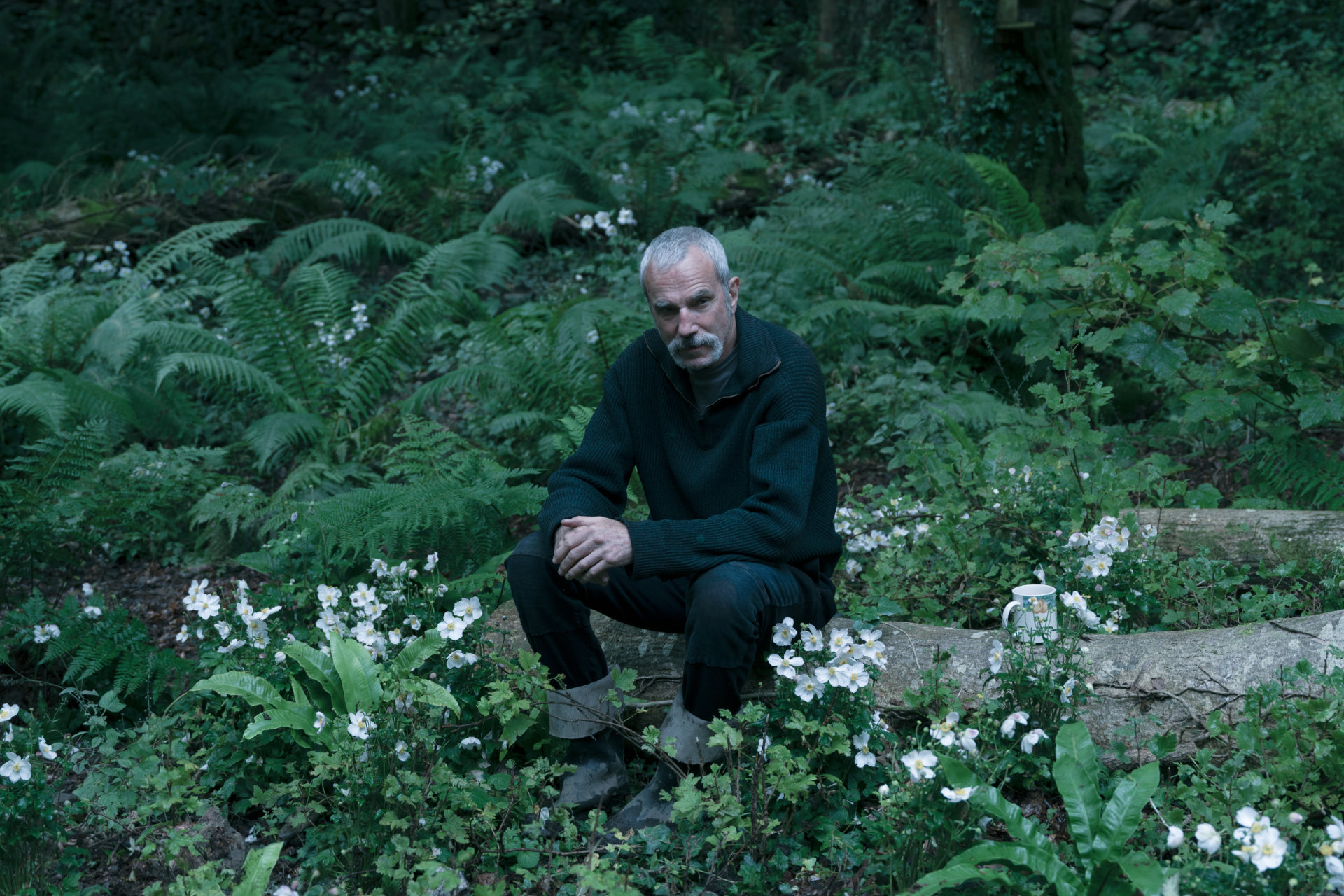
There’s no such thing as “ring rust” when you’re Daniel Day-Lewis, and it was foolish to even consider that for even one fucking second. Sure, Day-Lewis has been in some bad movies (Nine, anyone?), but the man is nothing if not committed. His retirement from acting was less a fuck-you to Hollywood this time — no cobbling here — and more an admission of just how much his line of work and, more importantly, his method takes out of him. As Tom Hanks’ pancreas knows, method acting has its consequences, and spending the prime years of one’s life immersing oneself in the minutiae of a performance can’t be totally healthy for one’s soul. You are totally giving yourself to a director, after all, and that much submission in the name of collaboration cannot be healthy — unless you’re a co-writer, like Day-Lewis is on Anemone, which he worked on alongside the director (and his son), Ronan. To avoid confusion from here on out, I’ll refer to the elder as DDL and the younger as RDL.
This is a titanic shift for DDL, whose sole behind-the-camera contribution before this point was his turn as a producer on the score for The Ballad of Jack and Rose 21 years ago. Coincidentally, that was another family affair, written and directed by the novelist and filmmaker Rebecca Miller, who just so happens to be DDL’s spouse. As such, it has a heft to it uncommon in collaborative projects of this nature. Anemone is about an absentee father of a dramatically different dimension than we’re used to. Following a traumatic event that ended his military career, Ray (DDL) abandoned his pregnant wife, Nessa (Samantha Morton), and ventured far out into the Irish wilds, living a rustic, if tormented, life on his own. His brother, Jim (Sean Bean), took his place in the family from which Ray fled, marrying Nessa and raising Brian (Samuel Bottomley) as his own.
No one quite understands why he left, though they know something catastrophic must have happened. Perhaps it was the cumulative effects of a lifetime of abuse from fathers, both biological and clerical, or from their own countrymen— Jim knows this better than anyone, having lived a parallel life to Ray’s, from their father’s house to the group homes to the military, though he didn’t suffer to the same extent. But when Brian starts down the same path, both by joining the military and also nearly beating a fellow enlistee to death over an insult about his absent dad, Jim decides he has to act.
He has the coordinates for Ray’s cabin on notes in a small sandwich bag labeled “Break in case of Emergency,” and Jim then ventures across the countryside (on a motorcycle) and through the woods (on foot) to visit his brother for the first time in decades. We observe what a break in routine this is for the hermit — at the very sound of a snapped twig, he drops what he’s doing and grabs a hatchet, his grip only loosening when he hears the sound of a vintage clicker (their “inheritance” as he later puts it). After a mug of tea, the two go about Ray’s day in near-silence. Conversation will come, eventually, and when it does, it becomes obvious how different they are in temperament. Jim is quiet, cool, and caring (he’s basically a pro at active listening), while Ray is aggressive, fiery, charismatic, and deeply, deeply troubled. He mocks his brother’s faith, tells a graphic story of how he may have gotten revenge on a priest who abused him, desperately tries to avoid reading the letter from Nessa that Jim’s brought for him, and gradually begins to open up about what, exactly, caused him to end up in these woods, far away from the life he used to know.
The forest seems to react violently to the thought of him leaving. As the story progresses, it feels nearly apocalyptic— a clever evocation of the fear response that comes with anxious depression, where the world seems to be doing its best to keep you in place, conversely, or push you out of your comfort zone like a splinter. Whatever choice he makes, he’ll have to confront the wreckage of his life and meet the son he’s avoided all of the young man’s life.
DDL, per usual, brings heat. He has three brilliant monologues in which he throws every inch of himself into conveying the multi-faceted nature of this wholly unpredictable character. RDL derives much of his in-scene tension from his father’s dynamism, as Bean (in a genuinely thankless part which he somehow manages to nail) listens with terror and care in equal measure. Yet even as Ray gets more emotional and violent, the pair never loses sight of their empathy for the character, who, despite all of the bad shit he’s done in his life, never had a chance to thrive in a situation that wouldn’t result in him getting hurt or damaging someone he’d come to care about. The setting is the film’s strongest aesthetic asset, with the Irish forest feeling almost as if it were the Wood of Suicides from Dante’s depiction of hell, quaking in agony as the breeze brings them back to life.
Given RDL’s background as a visual artist, it shouldn’t be surprising that the film is visually accomplished, and some of the more eventful scenes are gorgeously rendered — a hailstorm of golf ball-sized pellets and its aftermath being the standout. There’s an additional aspect of the setting, namely the time and conflict in which it is placed, that I can’t really speak to, but I look forward to digging into what others with the knowledge have to say about its context. Regardless, it feels richly drawn, with the film opening on a child’s pseudo-fresco of The Troubles as seen from their perspective: A Bayeux Tapestry depicting the origins of the modern Irish states.
Anemone does suffer from some of the first-film syndromes that often accompany a cross-medium transition. There are jerky cuts to other parts of the narrative when tension would otherwise build, and the film frequently drags through its silences rather than immersing us in them. Yet this is the closest I can imagine that we’ll get to a DDL-directed film, and I don’t believe he’s the kind of self-indulgent father who would automatically say yes to any terrible idea their fame-hungry kid would want to put on the screen. Dismissing a film as creepy and tender as this as “nepo baby” horseshit* takes away the collaborative nature of the project, and also flattens the richness of its meaning.
If this is a feature-length apology from a father to their child, it’s perhaps the most provocative since Annette, even if it isn’t as successful as what Leos Carax was able to achieve there. And, I don’t know, they could have restored a classic car together or hiked the Appalachian Trail, but they chose, instead, to try to communicate the complexity of their shared blood through emotionally resonant, often gorgeous, and occasionally frustrating cinema. So, yeah, if this is DDL’s equivalent of a wrestling retirement match, it makes sense that he’d go out paired up with someone he cares about, doing his life’s work on the grandest stage for the final time. It’s a meaningful way to go out, ending it on your own terms.
*We definitely need to come up with nepo baby standards and practices: My idea of that shit is someone with an undeserved “bootstrap” mentality who is — importantly — without the talent to succeed without their parents’ help in the industry. Otherwise, you’ll have to say Paul Thomas Anderson is a nepo baby (his dad was Ghoulardi!) at the function when the topic’s brought up, and everyone there will immediately throw plastic cutlery and paper cups at your head.