
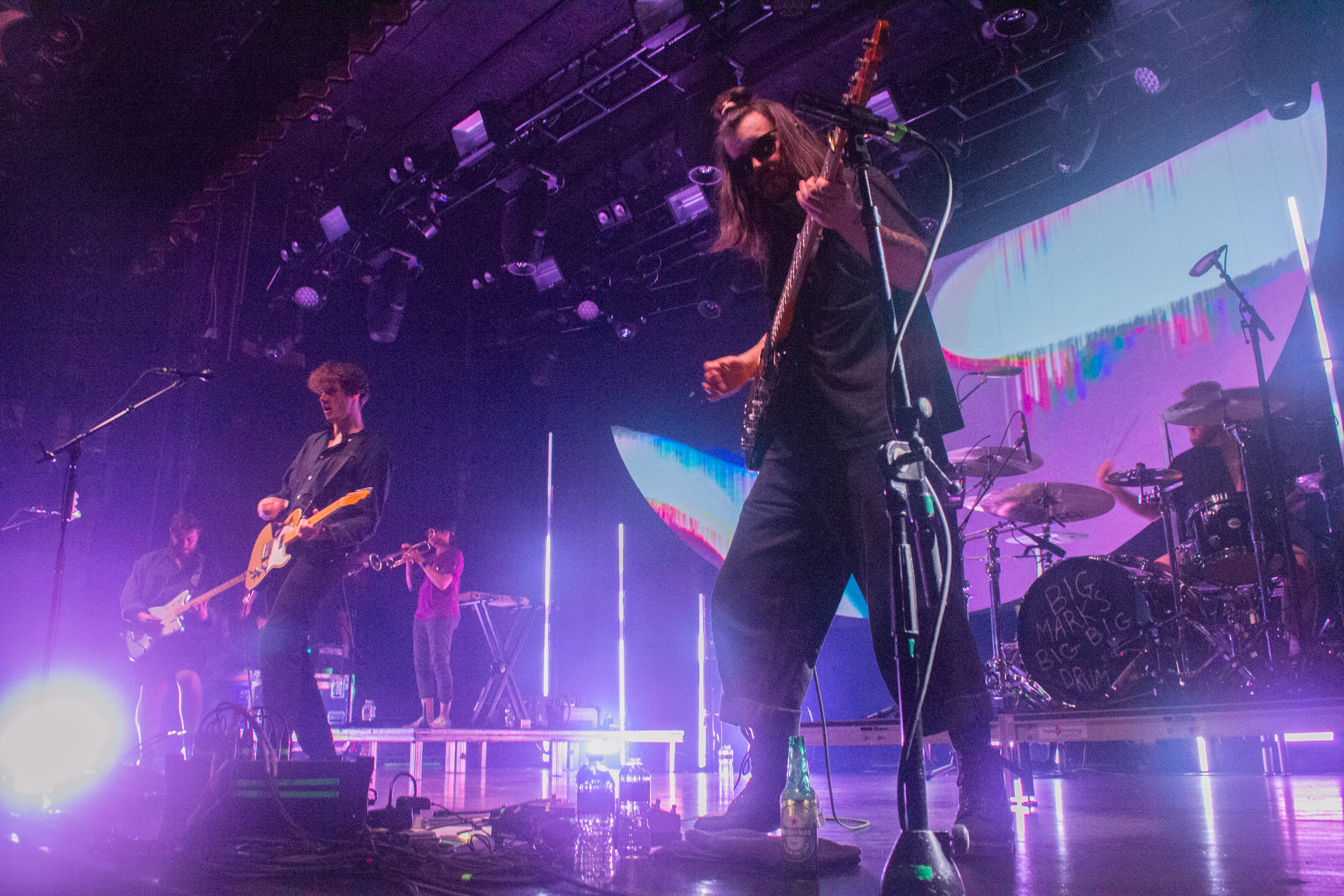
It was hardly apparent, prior to Friday night, that Lovejoy had never before performed live in Boston. The English band, nearing the end of their aptly-titled Across the Pond Tour, had sold out Royale well in advance, and despite the heat and waves of thunderstorms, fans were allegedly camped out all day for the show, eager to see a band that was only just beginning to tour.
Rumors spread through the crowd between sets that those at the barricade had been in line since 4 a.m. And honestly, it didn’t seem unlikely; the Theatre District nightclub-slash-concert venue was populated with a lively group of intensely fanatic early teenagers, and the energy they exuded, even after possibly 14 hours queueing, was such that can only come from youth unencumbered by the woes of 401(k) contributions. It’s genuinely reaffirming to witness that kids these days are still enthusiastic about music the way they’ve been for generations, albeit now aided by social media trends that move at breakneck speeds.
The night’s first opener, Spilly Cave (serving as the only non-Brits on the bill, hailing from Pennsylvania), took the stage as the Lovejoy merch line snaked down the stairs and past will call. And while some may have been unsure of what to expect, the band’s technical prowess was flooring. Their clear grasp on complicated jazz theory and technique gave the band room to groove in a way Vulfpeck would approve of, and audience members (myself included) were left scat singing along well after they left the stage.
Self-described “anti-folk” Manchester artist Crywank was up after a tight 15 minute stage reset. Vocalist and guitarist Jay Clayton stood alone onstage in front of a logo reading “James Merrill”; Clayton explained that while Merrill notably wasn’t present, or even a member of Crywank, the LED sign was an attempt to catch audience attention more than one guy alone on a stage could. Crywank’s music comes across as a less esoteric, more down-to-earth version of Hozier, or a less-populated Mountain Goats, and the acoustic set allowed the vulnerability of the lyrics to shine. Clayton was equal parts genuine and self-deprecating, apologizing at the top of his set for the fact that Lovejoy wouldn’t take the stage for another 45 minutes, but later offering a heartfelt message of support halfway through the performance in honor of pride month.
In the brief respite between Crywank and headliners Lovejoy, the energy in the room somehow tripled, with bisyllabic chants of “Love-joy! Love-joy!” erupting multiple times. At 8:30 sharp, three of Lovejoy’s core members and touring ensemble waltzed onstage to a combination of “Gimme Shelter” and piercing cheers from the crowd. Lead singer William Gold (also known as popular video game streamer Wilbur Soot) was soon to follow in typical frontman fashion, offering an apology for his “lateness.” With the floor palpably shaking from audiences jumping and hollering, the band immediately ripped into “You’ll Understand When You’re Older,” from 2021’s Pebble Brain EP.
With just three EPs and a handful of singles under their belt, including last month’s Wake Up & It’s Over, Lovejoy don’t have a large discography to choose from when building their set, but they’ve clearly developed a direction for their music to go in. Their sound immediately evokes memories of and nostalgia for a simpler time, when so-called “indie” bands were all the rage and Tumblr feeds were full of filtered angst; all of that to say, they’re releasing a sound in 2023 that The Strokes did in 2003, a pop-friendly rock that’s specifically tuned to sound rough around the edges. The sonic evocations of The Kooks (the two are so eerily similar that I found myself thinking Lovejoy would bust out “Naive” at multiple points during the evening) are endearing without being boring — like their openers, Lovejoy are clearly skilled musicians in their own right, and captivate audiences without relying on gimmick-y performance bits. This is genuinely just good indie rock that the kids in the crowd and their parents could appreciate.
Nearly every song in the set was accompanied by an introduction or explanation of some sort. The context ranged from politically-charged hypothetical situations — Gold described “Model Buses” as a song he would sing to Boris Johnston should the two cross paths in a bar — to a song “about a dead cat” to the universal experience of knowing your upstairs neighbor is sneaking out to your downstairs neighbor’s apartment to have an affair.
The combination of affable stage presence and simply enjoyable music made for a memorable show that the ardent fans in the audience are sure to remember. Whenever Lovejoy decide to make the trip back to the states from their English home of Brighton, one of Boston’s larger rooms is sure to be a stop.