
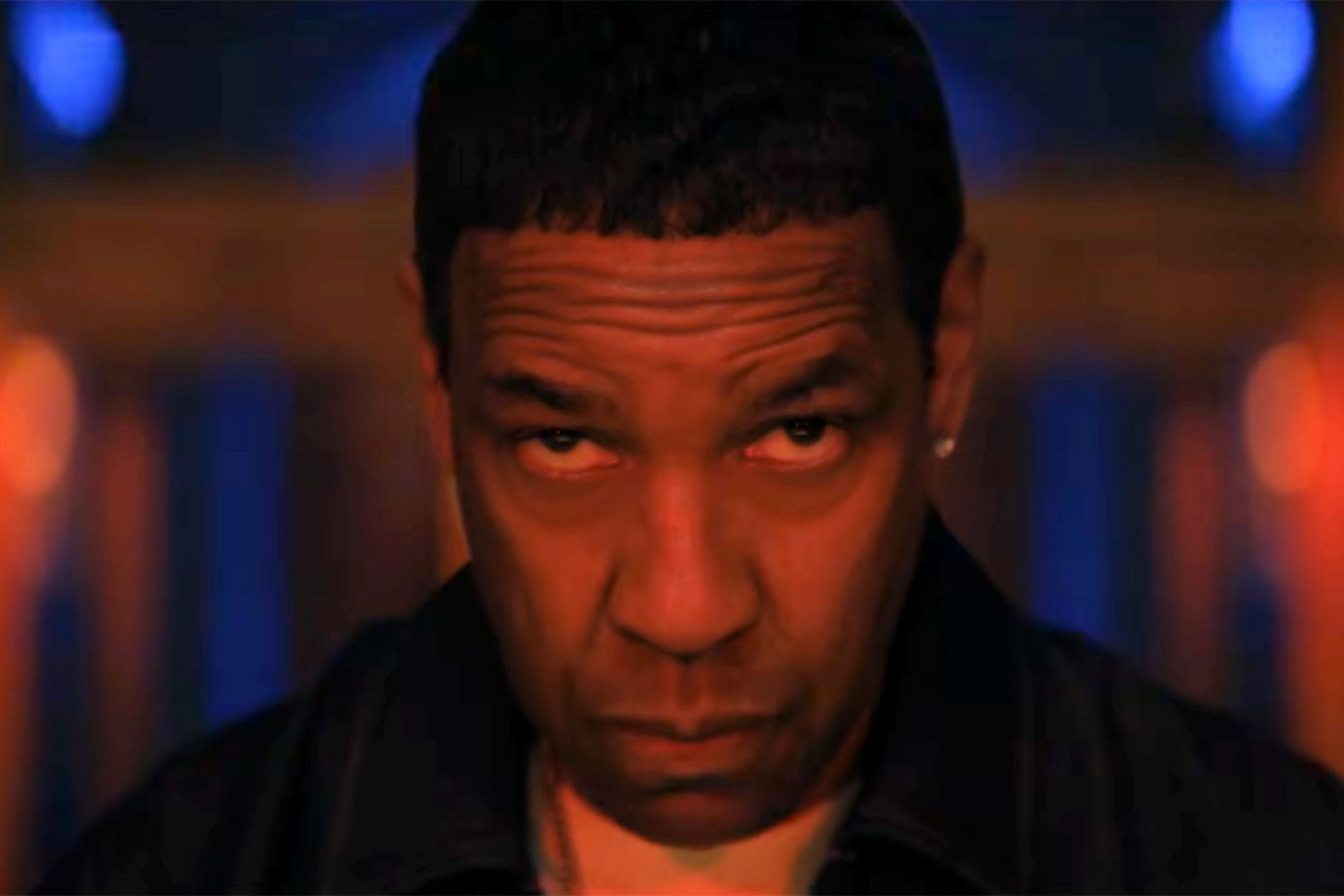
You know you’re in for a good time when, at the start of Spike Lee’s Highest 2 Lowest, you get a tongue-in-cheek yet still deathly-earnest montage of the sun rising over New York set to “Oh What a Beautiful Mornin’” from Oklahoma. It’s a tip of the hat to the film’s subject matter (provided that you’ve been forced to watch Oklahoma as often as I have been over the last three decades), mostly preserved by screenwriter Alan Fox in his localization of Akira Kurosawa’s 1963 masterpiece High and Low. I say “localization” because, like any good translation, changes have been made to preserve the integrity of the text’s meaning: A proper remake would inevitably get Letterboxd users mad that Lee was stepping on Bong Joon Ho’s turf. It’s still a film about envy and classism, ultimately, but lurking beneath the surface is a filmmaker reckoning with his age and relevance and artistic integrity and how culture has shifted and changed since he gate-crashed Hollywood and forced an entire industry to pay attention to what he had to say. This is the kind of ambitious shit I love, and Highest 2 Lowest is suffused with that gusto from nuts to guts.
Given that High and Low hit its 60 anniversary two years ago, I think it’s okay to start things from the end this time around. Two men sit across from one another in a prison visitation room. On one side of the glass, in civilian dress, is David King (Denzel Washington), a music mogul known for his skills at finding talent that charts, so much so that he is known as having “the best ears in the business.” He lives an opulent life in a high-rise, his walls covered in Basquiat paintings, gold records, and images of himself on the covers of Rolling Stone and Time. A Cartier bracelet is clasped on his wife’s wrist as Pam (Ilfenesh Hadira) says goodbye to him in the morning, idly discussing the half-million they’ll donate to a charity later in the day. His son Trey (Aubrey Joseph) emerges from the back of a Rolls when he shows up to LIU for a Basketball camp, driven by David’s longtime friend Paul (Jeffery Wright). That doesn’t mean he’s stressed, though: a rival’s looking to take over his label, and David’s looking to raise the money to buy out one of his partners so that he can control the board and prevent the sale.
The man on the other side of the glass, dressed in county orange, is Yung Felon (A$AP Rocky, having a hell of a year between this and his work in Mary Bronstein’s If I Had Legs I’d Kick You), a rapper with dreams of stardom. He spent years and years idealizing David, a black trailblazer in the music world seemingly struck from the Berry Gordy mold, praying to God that one day he’d get noticed. He did a bid upstate, had a son, and could feel his goals – and his chance to get rich – slipping out of his hands. So, he makes a desperate choice and does something stupid: He kidnaps Trey outside of basketball practice. Immediately, everything in the King household stops. The NYPD’s special investigations unit shows up and wiretaps all the phones, waiting for the kidnapper to call back. The tension is thick, and everyone is terrified for the kid’s safety. That doesn’t last too long, though: Trey’s quickly returned home, unharmed, and it turns out he was never kidnapped to begin with. Yung Felon grabbed Paul’s son, Kyle (Elijah Wright), instead, and he still wants his ransom money. David’s got serious concerns about paying it. Will he?
This moral dilemma shaped Kurosawa’s story, set in the boomtown days of recovery-era Tokyo where some folks recovered more than others, and it retains its focus here, but Lee’s variation is less direct agitprop and more circumspect about its director’s hard-fought position in the art world. Mifune’s character made shoes, Denzel’s makes icons – with different terrain comes different challenges. The change of industry and the lead character’s role within his business are important because they provide a corollary and a distancing element to Lee’s self-identification with David. He still sees himself as a fighter – one with status, of course, but one who played the game, made his way to the top, and deserves what he got given how hard he fought to get there – and he’s forced to confront that he’s powerful in a way that doesn’t necessarily translate to the modern world. Yung Felon’s a product of the streaming era, where precarity’s the name of the game, and it looks like his idol’s pulled up the ladder after leaving him and a whole generation of artists in the deep end. But if it’s getting harder for guys like David to hold on to the things they’ve built – AI and so on coming around the corner, predatory businesses looking to sell music rights for Viagra commercials – to the point that they’re seriously considering not paying the ransom money to get their best friend’s kid back so he can fend off a takeover, what hope is there for Yung Felon to make anything out of his talent?
Lee resolves this dilemma in a way that reflects his career path, opting to forego the kind of soul-sucking horseshit that his contemporaries put up with to get their projects to the screen. It’s meant to feel somewhat unsatisfying even as it’s genuinely affirming – these are questions that no one has the answer to, not even Kurosawa. You just keep on going, try to do the right thing, and try not to let your work ground you down to the point that you lose enthusiasm for what you do. It’s clear Lee hasn’t lost a step, and Highest 2 Lowest contains some of the best filmmaking he’s done in a while. Denzel brings out the best in him, and in Wright and Rocky, he’s given pretty formidable opposition (Wright has one of the best one-liners of the year when he pulls out a ratchet from the Rolls’ console compartment, and Rocky gets Denzel in a pseudo rap-battle, which kicks ass).
There’s a fantastic chase sequence set in the Bronx in the middle of the National Puerto Rican Day Parade, soundtracked by a live performance from Eddie Palmeieri and his band, in which Denzel tries to make the drop stuck between subway cars stacked with Yankee fans chanting “Fuck Boston,” all while the cops are chasing the scooter-riding perps making a smooth getaway with the money. So, yeah, Highest 2 Lowest is another banger from Spike Lee, entertaining as it is thought-provoking, as wonderfully acted as it is directed. In closing, I’d just like to say: We didn’t pull the emergency brake, but you guys had the funniest inning in World Series history last year. Congratulations!