
Editor’s Note: Vanyaland film editor Nick Johnston is back in Canada this week covering the 50th Toronto International Film Festival. And as usual, we wish we were up there with him! Check out our continuing 2025 coverage, get rolling with our official curtain-raiser, and revisit the complete Vanyaland coverage archives from past TIFF editions.
I don’t know if there’ll be a better example of capital-B Bravura filmmaking on display this year than what Park Chan-wook has done in No Other Choice, his adaptation of Donald E. Westlake’s 1997 novel The Ax, a feature he’s been hoping to make for a few decades at this point. You can tell the wait paid off in how utterly polished the final film is — this isn’t a dog-catching-the-car scenario like del Toro’s Frankenstein — and it is, for my money, likely to be the Best Movie released in this calendar year (though it may not necessarily be my favorite). I wish I could just prattle off a list of shots or specific moments strewn throughout instead of writing about it as a whole, describing, say, his unconventional ways of superimposing a character’s face on a conversation they’re listening to or the fact that he uses split-diopter shots in such a non-obvious way it’d make the guy working the “cinematic” Mets broadcasts blush for presenting them in such a noticeable way, or how his cross-fades make a dramatic impact, lingering on the juxtaposition between, say, a fire and a specific tree.
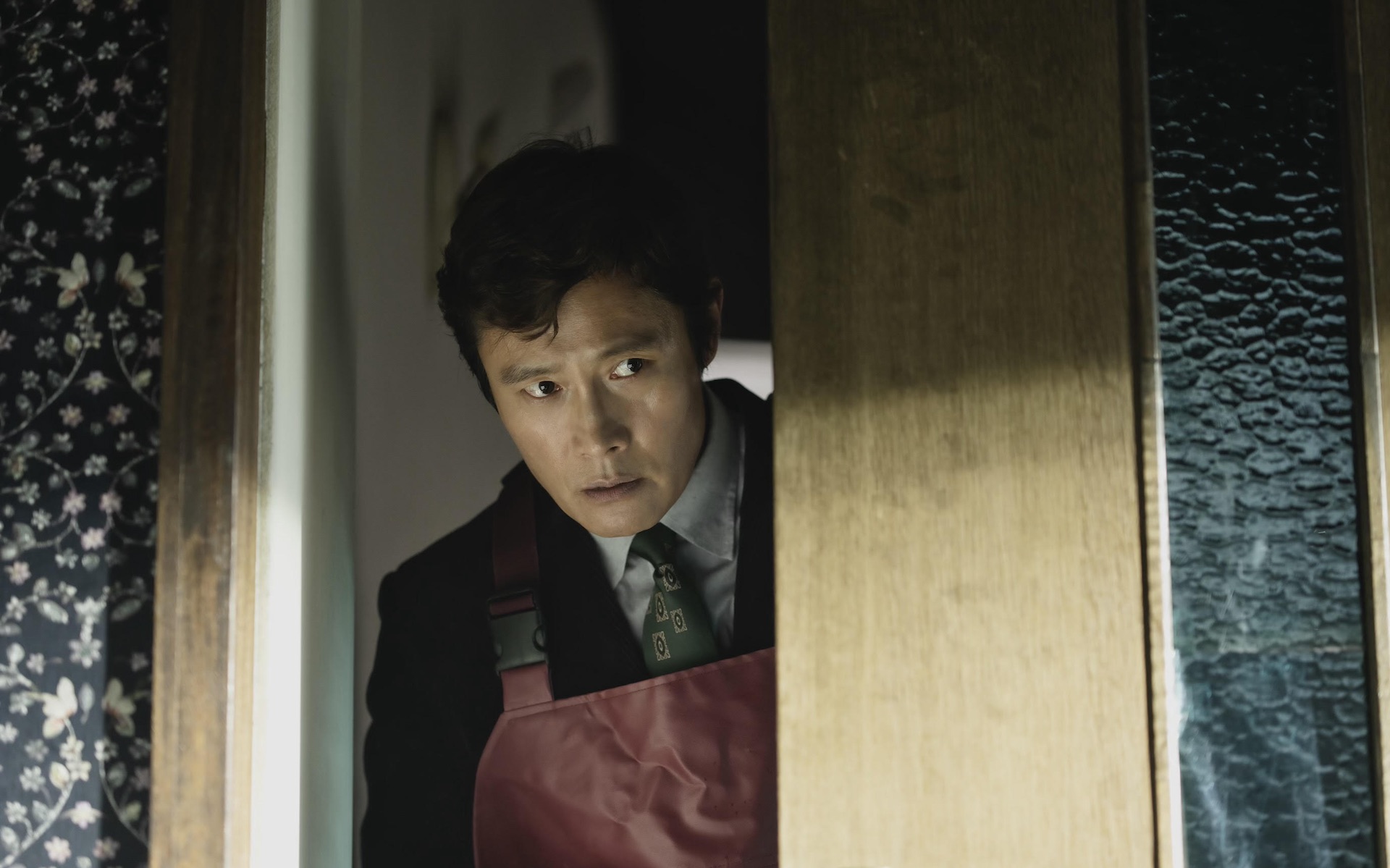
To do this would reduce it merely to a shot list or another flattening form of how we go about understanding great art without placing the proper emphasis on how simple its pleasures are, even to audiences who don’t give a good god damn about the technical attributes that make it work so well. To Western eyes, Park has always had the taint of the Vengeance trilogy coloring his work — one doesn’t make a film as transgressive as Oldboy without becoming wrongfully identified as a provocateur — and I’d argue that the label hasn’t been accurate since 2013 at the very least, when Stoker hit theaters. He is a master of comedy, and when paired with a brilliant and wholly committed leading man like Lee Byung-hun, who turns in one of the best performances of the year, if not the decade. There’s no sense of shame or embarrassment on Lee’s part, and he sinks so totally into the role of out-of-work paper industry manager You Man-soo that the words “Squid” and “Game” will quickly fade from memory. Good lord, how funny he is here, playing a buffoonish dad-type who “breaks bad” after getting dealt a bad hand.
No, he doesn’t head out to the desert and start cooking glassy candy for the camera — Man-soo is a little less imaginative and a lot more worried about maintaining his family’s lifestyle. See, he was nurtured by his company, rising through the ranks, making good money with every promotion, giving them nearly a quarter of his life, all the way until they sent him some fancy eel for him to cook on the grill on a beautiful summer afternoon. He jokingly prays for Fall, sweating it out over some roasting skewers in the afternoon heat, and his wish is granted. The next day, he falls, getting the axe from his company’s new American owners. He thinks he’ll be able to pick up a job within three months, and his wife (Son Ye-jin) encourages him to get back to work, although she doesn’t understand why it has to be paper. Anything would be good — they’ve got a teenage son and a daughter with special needs and special talent, being a cello virtuoso even before she’s hit a double-digit age.
Those three months pass without a bite, and it’s looking like he might lose the family home to a boorish moron when something in him finally snaps. Sitting alone in his greenhouse, he gets an idea — make a fake paper company, solicit resumes, identify any of the candidates that would stand in his way and eliminate them. He sees three competitors: A drunken audiophile with an actress wife, a former executive turned shoe salesman who can’t seem to make even the smallest sale, and a brassy rich asshole who embarrassed him when he was begging for a job. All he has to do is infiltrate their lives just a little bit and then — BANG! — the problem’s solved.
One aspect he hasn’t quite considered, though, is that it is much, much harder to kill someone when you emphasize with them, and Man-soo notices something of himself in each one. He’s also just a bumbling fool as well, which makes things particularly difficult when you’re trying to get away with murder. Yet, as his family starts to suspect he’s not going out for interviews all day like he said — how, after all, do you get a snakebite at a job interview without admitting you weren’t there and were spying on the drunk and his wife picnicking in the woods the behind their home — the walls start to close in. Then again, he had “no other choice” but to do it, because he had “no other choice” beyond a life in paper.
Park’s direction is so seamless and smooth, and his style never draws an absurd amount of attention to its flourishes, as there aren’t any signposts telling us to Pay Attention To The Cool Thing He’s Doing On Screen. It’s all about flow, and this makes him a natural fit for the kind of comedy he’s made ever since The Handmaiden. His Hitchcockian riffs are almost effortlessly funny (see Decision to Leave, which wasn’t even billed as one and was still perhaps the funniest movie of the year it released in) and No Other Choice has an asset the others don’t in Lee, a brilliant comedian who refuses to save face and plunges himself face-first into each and every pratfall and absurd conflict. There’s an incredible scene featuring the most bizarre Mexican standoff put to film in which the participants are trying and failing to shout their disagreements over a cacophonous stereo system, and Lee’s baffled reactions, frayed nerves, and jittery movements go a long way towards making it as instantly iconic as it is.
Yet Park never lets go of the tiny bit of empathy that he still has for this guy, even by the end of the film, in which he’s fully sold his soul to the Paper Gods at the cost of each and every one of his personal ideals. It’s a brilliant denouncement —featuring a moment in which Park tips his hand a little bit and outlines for us the visual through-line between a modern logging operation and a cellist’s bowing — that’s as bitter about the nature of modern-day capitalist struggle and our lead’s role in perpetuating it as it is bleakly funny about the character’s new normal. Even wilder, the entire goddamned film sustains that brilliance.
Once the pieces come together, it’s hard to see how No Other Choice doesn’t just punch in Parasite’s weight class but may very well knock it the fuck out when put face-to-face in the ring. Yeah. I went there. Park’s just that good. Even NEON thinks so. I doubt it’ll replicate that film’s success (few things will ever top that one), but boy howdy am I gonna do my best with what I have to try and get it over the line. So, go see No Other Choice. Seriously, just fucking go to it when it comes out on Christmas Day. You won’t be sorry.