
Editor’s Note: This review originally ran as part of our coverage of the 2025 Toronto International Film Festival, and today we’re re-publishing it with the film’s wider release. Check out our extensive review slate from TIFF50, revisit our official curtain-raiser, and check the complete Vanyaland coverage archives from prior editions.
Benny Safdie’s The Smashing Machine is essentially about learning how to lose. Early on, our protagonist, the champion mixed martial artist Mark Kerr (Dwayne “The Rock” Johnson) is asked by a Japanese journalist how he’ll take it if his opponent comes out on top. He doesn’t even think it’s possible, and you can see the growing frustration on his face as the writer pushes the question. It’s a concept that he “can’t even intellectualize.” Losing just doesn’t compute — all he knows is victory, and he can’t conceive of a universe in which he might get his ass handed to him by someone. Of course, the next night, he gets his ass handed to him by a Russian kickboxer, using moves that the Pride Fighting Championship supposedly banned, and, even though the decision’s later ruled a “No Contest,” the damage has been done. He’s a loser, weeping openly at his locker for all the golden glories in his future that are now marred by this blemish.
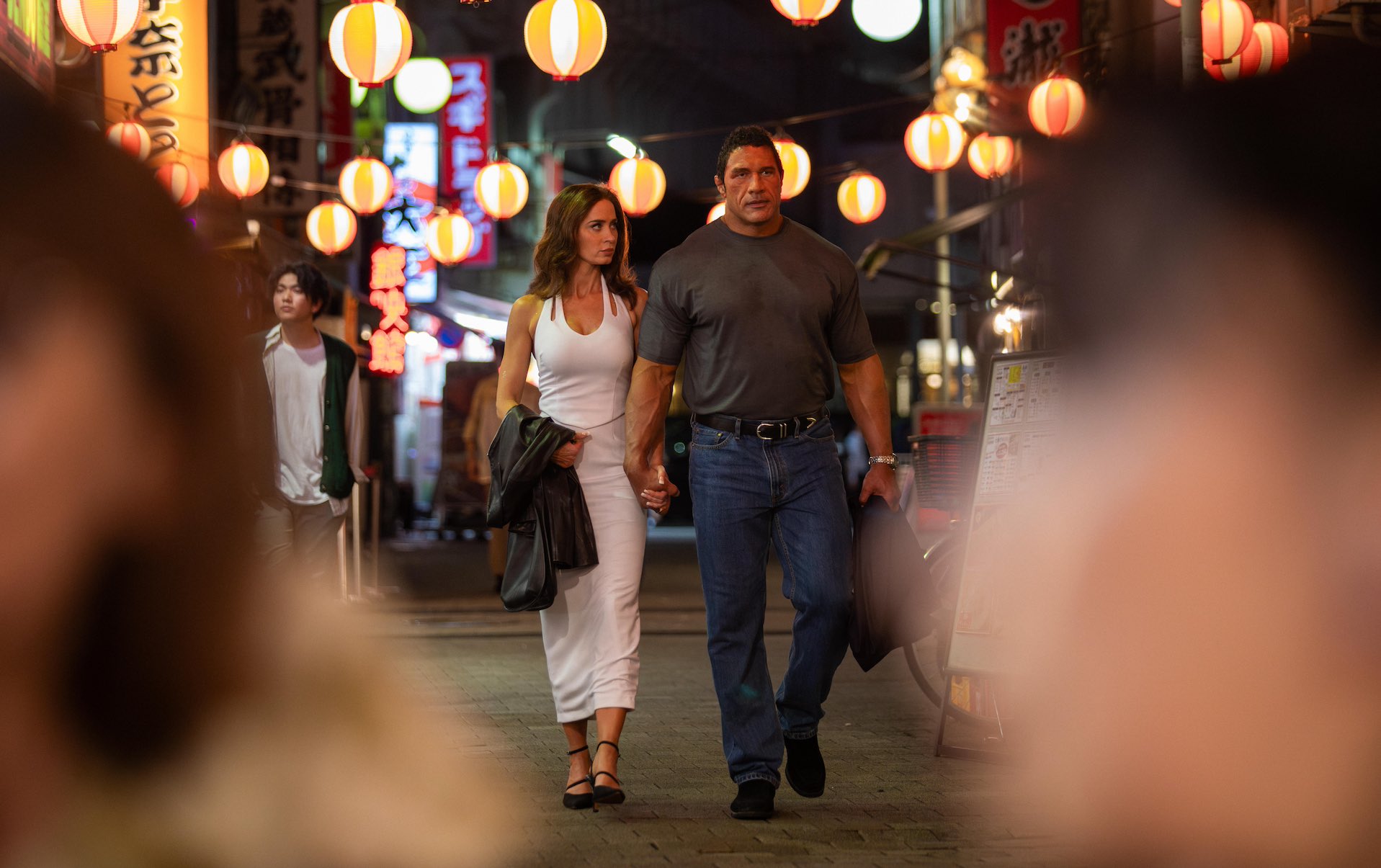
The loss rocks his foundation in more ways than one. His girlfriend Dawn (Emily Blunt) senses something’s really wrong with him. He’s been using opiates to get through the day, managing the abuse he puts his body through for a payday with a few units of comfort in the downtime. This involves a lot of charm and effort on his part, managing doctors, pharmacies, and insurance. His best friend, sometimes trainer, and fellow fighter Mark Coleman (former Bellator champ Ryan Bader) is worried about him too, but he’s miles away in Ohio, far removed from Kerr’s house in Phoenix, hearing about it through panicked calls. After he overdoses, he has his “come-to-Jesus” moment following a conversation with Coleman, goes to rehab, and gets back to work, training for another Pride tournament. Working with trainer Bas Ritter (playing himself), Mark gets back in the best shape of his life and rolls his way through the first round. Then, right when it looks like he might square off against Coleman in the Final, he loses in the semifinals.
Does all that (publicly available knowledge) sound unsatisfying? Well, it isn’t. The Smashing Machine is a fascinating exploration of one enigmatic man’s struggles and how he overcame them without dipping into the deep end of the Rocky pool of sentiment. It’s set at a moment in the history of MMA that is pure aesthetic catnip for a director like Safdie, who takes the weird world of combat sports in the late ‘90s and early ‘00s and makes it feel big-screen cinematic. There’s a fantastic depth and richness to his imagery that always escaped the tapes of Pride and early UFC cards, immediate, occasionally beautiful, and often just plain strange. There’s always been a surreal element to MMA’s carny aspects — the “octagon,” pulled straight from Conan the Barbarian, fighters emerging from giant smoking plywood pyramids, and pyrotechnic displays set to an electric guitar performance of Japan’s national anthem. Those elements are vastly more interesting to Safdie than the fights, and they’re handsomely recreated here. The score, by jazz composer and harp virtuoso Nala Sinephro, is one of the year’s biggest treats for a music nerd inclined towards film scores, and the way Safdie uses it to heighten the emotional landscapes is truly impressive.
What’s also impressive is Johnson’s performance, which is legitimately the best work he’s ever done in a dramatic non-action context outside of a wrestling ring (though his comedy is usually pretty funny). Kerr’s nature plays to his strengths as an actor, namely in how warm and gentle he is despite his hulking frame, and how so much of that is underwritten by anxiety — he’s aware of how ephemeral his life as a fighter is. He’s convinced himself that he’s invincible as a kind of coping mechanism, which is understandable when you’re gearing up to get a knee slammed into the back of your skull. That kind of confidence is hard to come by, and once it’s shattered, it’s impossible to get back. Yet Johnson manages to stress his growth without resorting to easy cliché, and the atypical story beats help him avoid the pitfalls by refusing to indulge the easy choice.
Yet The Smashing Machine is built from the ground up to support his success, and it’s probably the wisest series of choices Johnson’s made as a producer of his own star vehicles. Taking this story nearly beat-for-beat from the John Hyams documentary it’s adapted from was one. Another was hiring Safdie, who has experience manicuring a project to suit his lead’s needs. The casting is indicative of that commitment, engineered to offset his weaknesses while pumping up his strengths. It’s evident that Johnson trusts Blunt in a different way than a lot of his co-stars in other movies, and there’s a legitimate intimacy to their work together here that feels naturalistic (and although Blunt is excellent here – she adds some devastating chaos to his recovery – I do wish I could see the world in which Julia Fox played this role), but it’s the non-actors, typical of a Safdie production, who go a long way to making this work as well as it does. Bader and Ritter are the kind of no-bullshit guys who, for a leading man steeped in sports entertainment, give the moment credibility and relatability specifically to Johnson’s lived experience.
In light of the absolute drubbing Johnson’s gotten from the press ever since the Black Adam days, it’s somewhat poetic that The Smashing Machine is his big return to the multiplex. He had some absolute dogs over the past half-decade, and was omnipresent in entertainment in a way that usually results in a star losing every ounce of goodwill they’ve accumulated. He went from being an iconic wrestler to a movie star that no one took particularly seriously to the most bankable person in the industry in such a short amount of time. Like Kerr, it honestly wasn’t particularly obvious to know when he’d lose – you could blame shit like Baywatch on the studio needing IP to get out the door or a Fast and Furious feud on Vin Diesel or whatnot – but the string of poorly-received and terribly-considered projects that should have been within his wheelhouse had him stacking Ls. As mirrored in Mark Kerr’s journey to hell and back, The Rock had to learn how to lose to find himself again, and from the look of it, he’s back and better than ever.