
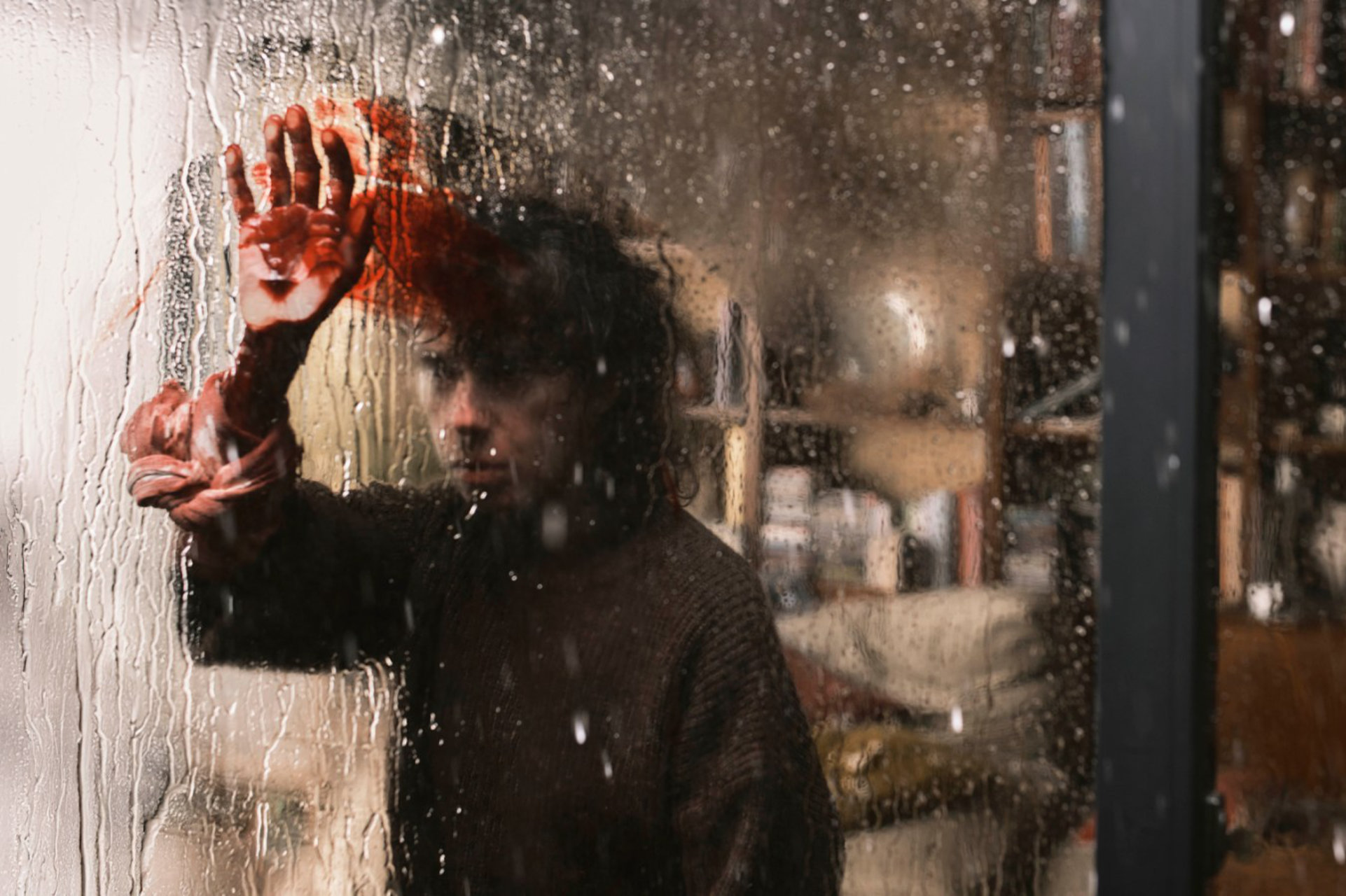
Kudos to Danny and Michael Phillipou, the YouTubers-turned-horror-hitmakers (hereby referred to by their channel name, RackaRacka, for brevity’s sake): Despite what must have been immense pressure, they resisted the calls from producers and studio heads and didn’t jump ship to a mainstream franchise. They didn’t even shift their focus towards a specifically American story (even though they could have with those Aussie tax credits baked in). Why should they? After all, they’ve proved that audiences everywhere will flock to see an outback-set horror picture as entertaining as Talk to Me. The question is, will those same people follow them in the dark once again when the destination is Bring Her Back, a particularly gnarly bit of splatter cinema that sees what Talk to Me did to viewers with weak constitutions and tries to see if it can make them puke and faint this time. Who knows or cares, really, but I certainly hope folks take the plunge.
Like their previous film, Bring Her Back is about the intersection between two families, here a pair of newly orphaned half-siblings meeting their new foster mother and her… well, strange kid. The eldest, Andy (Billy Barrett), is nearly 18 and has spent a good portion of his life looking out for his half-sister, Piper (Sarah Wong), who’s legally blind. He’s the kind of kid who has had to grow up rather quickly in a somewhat stunted way — Dad was Dad, but that didn’t mean he always behaved like a good one — and he sees his role in the world as Piper’s protector. They’re well-defined characters, with swell grace notes inserted (Andy’s braces place a heartbreaking emphasis on the fact that he is just a kid), and their relationship is believable. So, instead of having CPS split them up after their father passes away, he pleads with the social workers to join her at the same foster home—a finger on the metaphorical monkey’s paw curls.
Laura (Sally Hawkins) is, on the surface, the kind of well-meaning oddball that winds up taking in foster kids in a much nicer film. Here, her cheery exterior and quirks (she introduces them almost immediately to her long-taxidermied dog, Pom Pom) conceal a manic urge to heal a long-opened wound. She casually mentions she had a daughter who passed away before quickly shifting the subject towards her other child, which doesn’t distract from the oddness of the situation as much as she hopes it might. Oliver (Jonah Wren Phillips) is an emaciated, bald, bizarre kid who seems to have an intense case of pica — he’ll eat anything, a modern-day Mikey — and of course there is burning, fucked up fire waiting behind all that smoke. But the kids can’t immediately see it, and Laura sets about tearing them apart, trying to make Oliver doubt his sanity while using all of her skills as a former social worker herself to mask it as “healing.” And when things go wrong, boy, do they ever go wrong.
All of the performers do a swell job, but of course, it’s the villain who runs away with the picture. Hawkins is the type of top-tier acting talent who has the misfortune of being frequently miscast in roles in productions that are too big to turn down. In many Hollywood productions (Godzilla and so forth), she becomes less of a presence than an “Academy Award Nominee” superlative to be tossed on the bottom half of a casting announcement. This is a goddamned shame because she’s fabulous in works where the director sees her as more than set dressing. RackaRacka, ironically enough, joins the likes of Mike Leigh, Guillermo del Toro, and Mark Romanek in understanding just how ferociously she can dominate any scene. Specifically, they utilize her skills in much the same way that Leigh did: her character here is an exquisitely rendered riff on her work in Happy-Go-Lucky, one that suggests a different kind of optimism: Desperate, grief-heavy, and soul-corroding. All that, and she’s funny as hell, too: when the time comes for the third act to go down the “hide what I’m doing from CPS” route, what follows is a splendid bit of comedy as she tries to conceal a gushing bite wound on her wrist with a towel and her pallor as your run-of-the-mill flu to a former friend (who, of course, buys it wholesale until…). She’s deeply uncomfortable with being devious, but it’s something she has to do.
In focusing on the psychology of these characters, RackaRacka has made a deliberate choice to switch up the style they used to seduce viewers back in 2023. There’s little of the attention-grabbing flashiness of Talk to Me‘s possession scenes, and as a result, the film’s opening drags on until Hawkins arrives and the story’s dimensions start to become clear. Then, it becomes clear that the stylistic change isn’t second-feature wheel-spinning. Nope, it’s a conscious shift to New French Extremity-style gore and discomfort. Oliver’s pica results in one of the most stomach-churning setpieces since In a Violent Nature‘s pretzel-person.
Honestly, it’s impressive how utterly bleak RackaRacka’s films are, but since they don’t carry themselves with the kind of “elevated horror” airs as some of their other A24 brethren do, it’s harder to notice. Bring Her Back is brutal, and all of its most intense moments happen to children (and not in a bizarro Who Can Kill a Child way) — but Hawkins’ lightness helps you ignore it, somewhat, at least until the knives come out. As such, it’s awesomely horrifying. Good summer so far for horror, huh?